
Readers and writers are easy to like and surprisingly hard to buy for. They already have the books. What they rarely buy for themselves are the things around the books: a light that doesn’t disturb the person next to them, a comfortable place to sit, a pen they enjoy, paper worth writing a letter on.
Below, the gifts are grouped by the person you’re shopping for. I put this guide together for the readers and writers this journal is written for: I went through the Amazon listings, chose gifts that look useful for them, and describe each one from its listing rather than from having tested it. Every entry has the same three parts: who it’s for, why it made the list, and one thing to check before you order.
How I chose
- It gets used. Every pick fits into an ordinary evening of reading or writing. I left out novelty items that get opened once and put away.
- It suits real readers. This journal is written for self-publishers, and writers are readers first. I thought about tired eyes, stiff hands, and reading in bed, not about what photographs well.
- No borrowed characters. I skipped gifts built around film, TV or brand characters. Everything here stands on its own.
- A range of sizes. There are small gifts for a stocking or a book-club swap, and a few larger ones for someone close to you.
- No prices, on purpose. Prices on Amazon change often, so I don’t print them here. Check the current price on the product page before you buy.
Where I describe a feature, it comes from the product listing as it read on 9 October 2026, so check the listing for current details before you order.
For the reader who reads at night
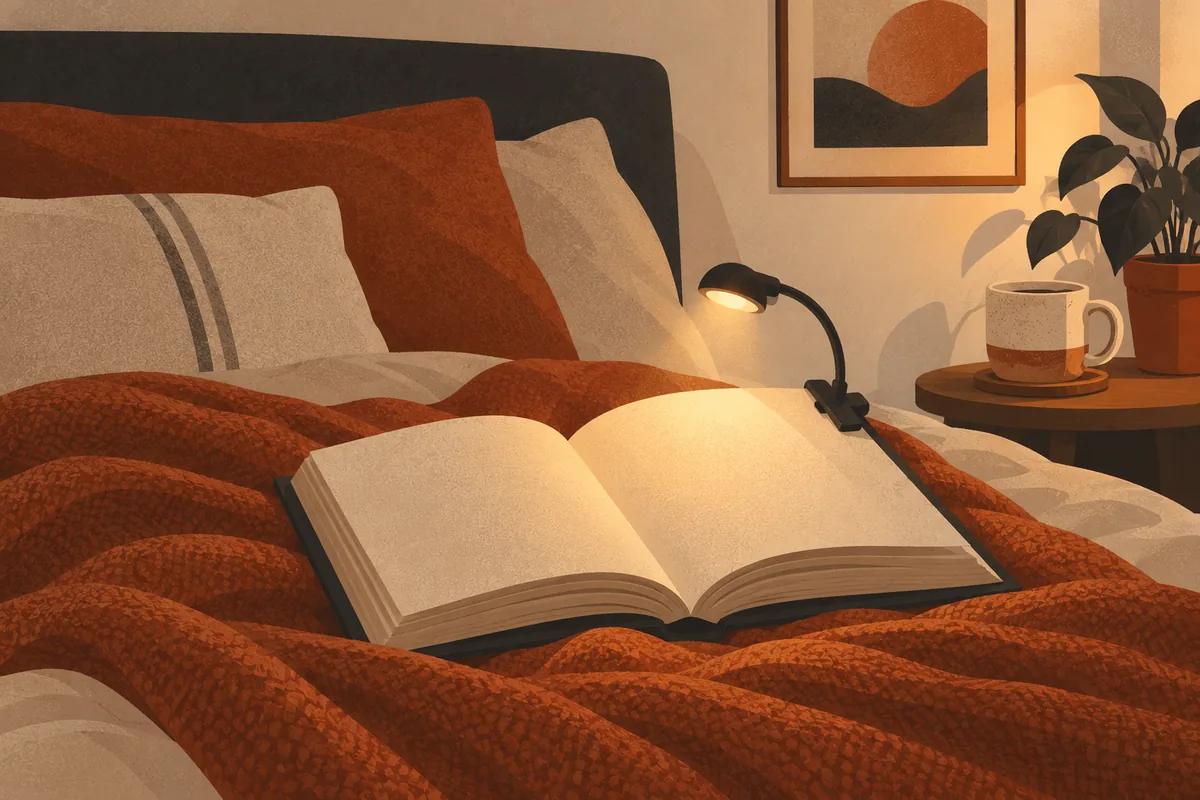
Reading in bed is a habit many readers keep for life, and the lighting is often the weak point: a lamp that is too bright for the person beside you, or too dim for tired eyes. A light that is aimed at the page rather than the room tends to solve both problems. Many people also find a warmer colour gentler in the evening.
Gritin 9 LED rechargeable book light
Who it’s for: the reader who keeps going “one more chapter” after the bedside lamp is off, and anyone who shares a bedroom with an earlier sleeper.
A clip-on book light is the simplest way to read in bed without lighting the whole room. This one clips to a paperback or hardback and is meant to light the page rather than the room. It charges by USB, so there are no coin batteries to hunt for, and the listing gives three colour settings, cool white, warm, and a mix of the two, with a dimmer for brightness.
I picked it because it does one job and fits a lot of people on a gift list, including the hard-to-buy-for. If the reader will use it late at night, the warm setting is the one to look for, since it feels closer to a lamp than a screen. It is also handy for a writer reading a printed proof of their own book in the evening, pen in hand.
Good to know: It is small enough for a stocking or a book-club gift bag. If the person reads mostly on an e-reader with its own light, pick something else from this list.
Glocusent bendable neck reading light
Who it’s for: readers who like both hands free: the armchair reader with a cup of tea, the knitter who reads between rows, and anyone who finds a clip awkward on a heavy hardback.
Instead of clipping to the book, this light rests around the neck. Two bendable arms point the light down at the page. Because nothing is attached to the book, it works the same for a slim paperback, a thick hardback, a magazine, or a knitting pattern. The listing gives three colour settings and three brightness levels on each arm, and it charges by USB-C.
It fits the way many people actually read: in a favourite chair, glasses on, holding a book that is a little too heavy for one hand plus a clip. It doubles as a hobby light, so it also makes sense for the reader who sews, crochets, or does jigsaw puzzles in the evening.
Good to know: Some people find anything around the neck uncomfortable. If you are not sure, the clip-on light above is the safer choice.
For the reading corner
One gift that makes sitting up to read more comfortable, and one that makes the reading itself easier.
Linenspa reading pillow with arms (XL)
Who it’s for: someone who reads or writes in bed and ends up propped on a pile of ordinary pillows that keep sliding down.
A reading pillow is a backrest with arms, like the top half of an armchair, that sits against the headboard, giving you something to lean on instead of a stack of pillows that keep sliding down. This one is the extra-large size and is filled with shredded memory foam.
I put this on the list because it fixes a daily discomfort rather than adding a nice extra. A reader who sits comfortably tends to read longer, and a writer who drafts on a laptop in bed gets a steadier place to work. It is also a considerate gift for someone spending more time in bed than they would like.
Good to know: It is a large pillow and takes up real space on a bed. If easy washing matters to the person, check the cover’s care instructions on the listing.
Kindle Paperwhite, 16 GB (2026)
Who it’s for: a reader who travels, reads several books at once, or would like larger print without hunting for large-print editions. Also a writer who wants to see their own ebook on a real device.
This is the 16 GB Kindle Paperwhite from Amazon’s redesigned e-reader line-up, announced on 1 October 2026 (About Amazon, 1 October 2026). An e-reader holds a whole library in one slim device. For many readers the most useful thing about it is simple: you can make the text as large as you like, and it has its own adjustable warm front light, so it reads well in a dim room.
It is the larger gift on this list, and I included it for one practical reason. If someone already reads every day, it makes that easier.
For an author there is a second use. Before publishing, self-publishers often check how their ebook looks, and the free Kindle Previewer from Amazon is a common way to do it on a computer. It is worth looking at chapter headings, line breaks, spacing and images, because these are the things that most often look different from the document you wrote. Seeing the book on a real e-reader as well gives a good sense of how a reader will meet it.
Good to know: If the person already owns a recent e-reader, choose a different gift. If it is for a particular day, check the delivery date on the listing before you order. If they borrow ebooks from a library, check that their library’s service works with this device in their country before you buy.
For readers who like to make things
Book nooks are small lit scenes that stand between your books like a bookend. You build them yourself, over an evening or two.
CUTEBEE “Owl Bookstore” book nook kit
Who it’s for: adults and older teens who enjoy a quiet evening project: model makers, puzzle people, and readers who love the look of an old bookshop.
A book nook is a narrow diorama that stands among your books, with a small scene inside. This one is a miniature bookstore with a dark green shopfront and a warm LED light that turns on with a touch. It arrives as a kit of wooden parts, and you put it together yourself. When it is finished, the scene glows in the gap between two books, and that small surprise is the whole charm.
It is a gift of time as much as an object. The listing puts the build at one to two hours and pitches it at beginners, so it works as a first kit. Taken slowly, it is a pleasant evening’s project, and the finished piece stays on the shelf afterwards. That makes it a good choice for the reader who already owns every book they want.
Good to know: This is a hobby kit with small parts, not a toy for young children. The listing gives the age as 14 and up. The light runs on two AAA batteries, and the maker says batteries and craft glue are not included, so add both.
Rolife “Silent Corner Study” book nook kit
Who it’s for: someone who enjoyed a first model kit and wants another, or a reader drawn to old libraries and quiet reading rooms.
Same idea as the kit above, a lit miniature scene that stands among your books, with a different mood: an old-fashioned study rather than a shop. The maker describes a small reading room with a vintage desk, a lamp, a rocking chair, tall shelves with a ladder, and a window with a red curtain.
The bookstore is warm and busy. The study is calmer. Pick whichever looks more like the person you are buying for. This one has more parts, and the maker estimates about three hours of building, so it also works as a second kit for someone who enjoyed the first.
Good to know: Small parts again, and a slightly longer build than the bookstore. The light turns on with a touch and runs on two AAA batteries, so add a pack in case they are not in the box.
For the writer
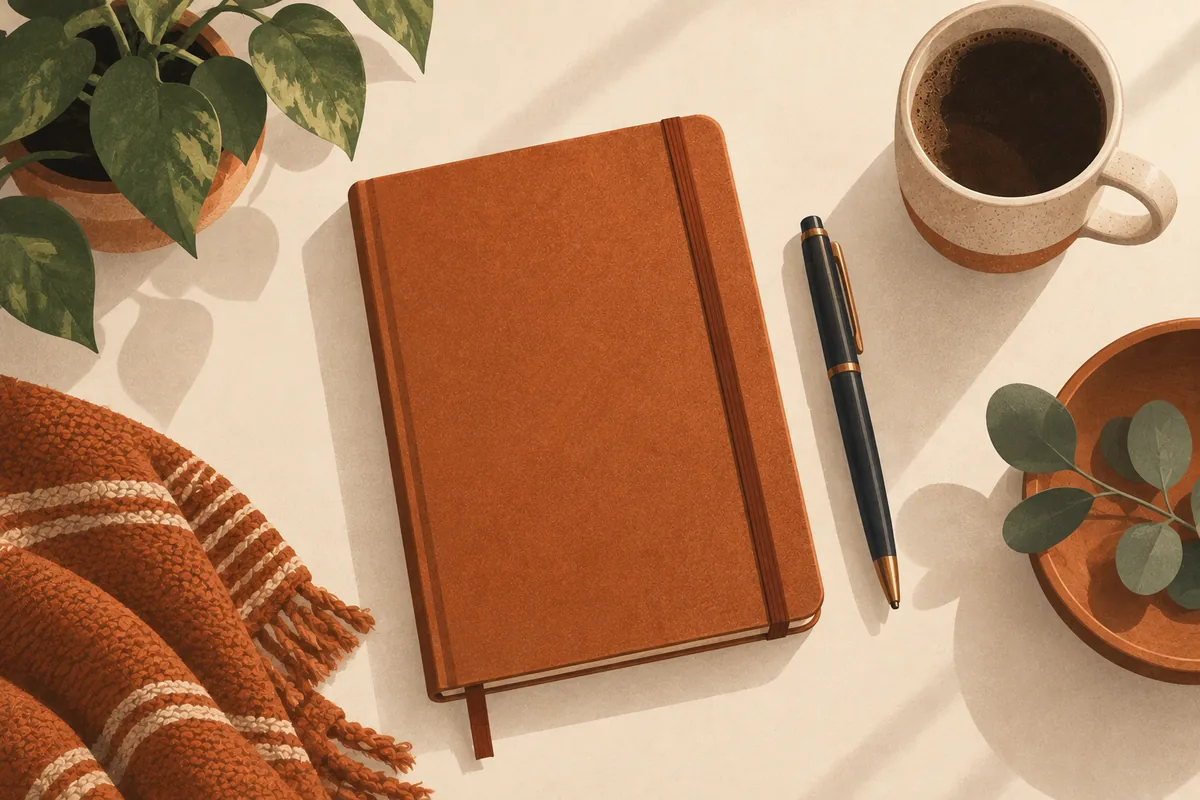
Many writers outline, plan scenes or write rough first drafts by hand, because writing by hand is slower and the page feels less final. A short, timed session on a single prompt, ten minutes or so, can also be an easy way back in when a draft has stalled. Nothing written that way has to go into the manuscript. The aim is simply to get the pen moving.
Asvine “Forest” fountain pen (matte black, extra-fine nib)
Who it’s for: a writer who drafts or journals by hand, or someone curious about fountain pens who has never owned one.
A fountain pen needs less pressure than a ballpoint, which some people find easier on the hand over a long page. This one has an extra-fine nib, so it writes a thin line, closer to a fine ballpoint than to a broad calligraphy stroke. It comes with a converter, so it can be filled from a bottle of ink, and it arrives in a metal pen box.
A pen they enjoy using makes the blank page a little more inviting. I chose this one as a first fountain pen because, going by the listing, the design is plain and the fine nib suits ordinary notebook paper.
Good to know: A converter needs bottled ink. The listing says no ink or cartridges are included, so add a bottle of ink. Fountain pen ink can show through very thin paper.
642 Things to Write About (Chronicle Books)
Who it’s for: anyone who says they would like to write more but doesn’t know where to start, and working writers who want a warm-up before the real work.
This is a guided journal from Chronicle Books, put together by the San Francisco Writers’ Grotto. It holds 642 short prompts with space to write right under them, so the prompts and the notebook are the same book. You open it, pick one, and write for ten minutes.
A prompt makes the first decision for you, so the only job left is to fill a few lines. For someone working on a first book, ten minutes on a prompt before opening the manuscript is a gentle way in. It also fits a New Year goal of writing a little every day, because there is no plan to keep up with, only the next page.
Good to know: It is a printed book with writing space, so it is for pen-and-paper people. It goes well with the fountain pen above.
The Plaid Barn personalized book embosser
Who it’s for: the reader with a large home library who lends books and would like them back, and the author who gives signed copies.
An embosser presses a raised mark into the paper, usually on the title page or an endpaper. This one is engraved with the name or wording you give, and the listing offers designs such as “From the Library of” and “Ex Libris”. You place it on the page and squeeze, and there is no ink to dry or smudge. The maker, The Plaid Barn, says each one is engraved by hand in Nashville, Tennessee.
It is a personal gift. A book with your name pressed into the first page is easy to trace back to you, which is the real appeal for anyone who lends books. For an author, it is also a quiet way to mark copies you give to family, friends, or a local library.
Good to know: It is made to order, so check the delivery time on the listing. If it’s for Christmas, order early. The listing offers several designs, so check which one is selected, and check the spelling of the name twice before you submit it. The listing is marked non-returnable, so check the design and wording before you order.
For letter writers
Two gifts for people who still send handwritten notes, or would like to start.
CHUHUAYUAN wax seal stamp kit
Who it’s for: pen-pal people, card writers, and anyone who still sends handwritten thank-you notes.
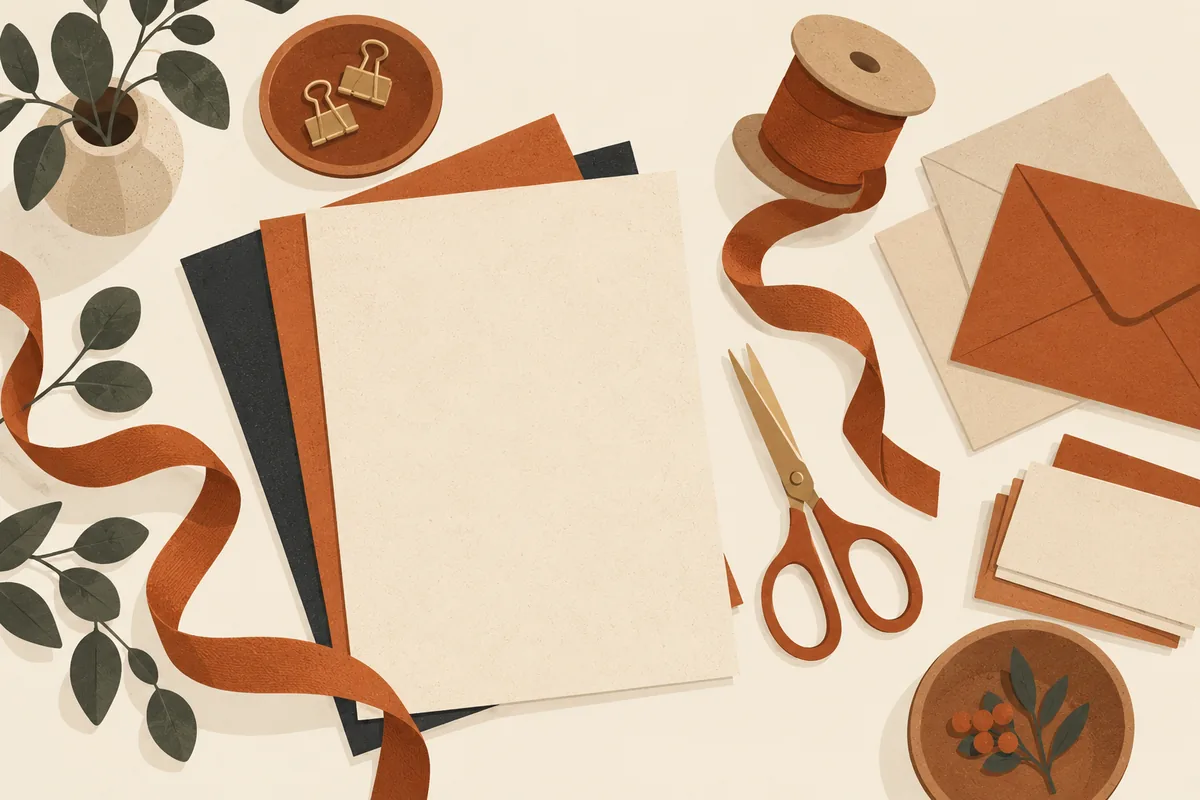
A wax seal turns an ordinary envelope into something worth keeping. This kit has wax beads in 24 colours, a small warmer for melting them, a seal stamp and two metallic pens. You melt a few beads, pour the wax onto the envelope, press the stamp, and wait a minute.
It is useful well beyond December: thank-you notes, wedding cards, birthday letters, Valentine’s Day. For an author, a sealed note tucked inside a signed copy is a personal way to thank an early reader.
Good to know: It involves hot wax, so it is a gift for adults. Raised wax can snag in postal sorting machines, so check with your postal service, or put the sealed envelope inside a second one.
TaoBary vintage airmail stationery set (160 pieces)
Who it’s for: someone starting a pen-pal friendship, grandparents who write to grandchildren, and anyone who likes the look of old airmail letters.
This is a matching set of writing paper, envelopes and stickers in a vintage airmail style. The listing counts 160 pieces in all: 50 double-sided sheets, 50 matching envelopes and 60 round stickers, in ten designs. Because everything matches, a letter looks finished without any effort.
A ready-made set also removes the excuse of not having anything nice to write on. The sheets are about 14 by 21 cm, a comfortable size for a one-page letter or a long thank-you note. If you’d like to give something larger, it pairs well with the wax seal kit.
Good to know: Test a fountain pen on one sheet first, because decorative paper can be thin. The stickers are decoration only, so the letter still needs real postage.
If you are still not sure
Think about where the person reads or writes, and what gets in the way. If it is the light, start with one of the two lights. If it is comfort, the reading pillow. If they talk about writing but rarely start, the prompt journal and the pen. If they love post, the wax seal kit and the airmail paper.
A small gift that fits a habit they already have will get more use than a big one that asks them to start a new one.